Developer support in pre-production
I joined after the project had already started and helped make gameplay and UI questions tangible early, so the team could align faster around what should actually be built.
Leveraging Design Thinking workshops and scalable UI systems to drive studio-wide UX maturity and optimize the player journey.
Client
Still Alive Studios
Duration
11 Monate
Role
UX Designer
Tools
Figma, Miro
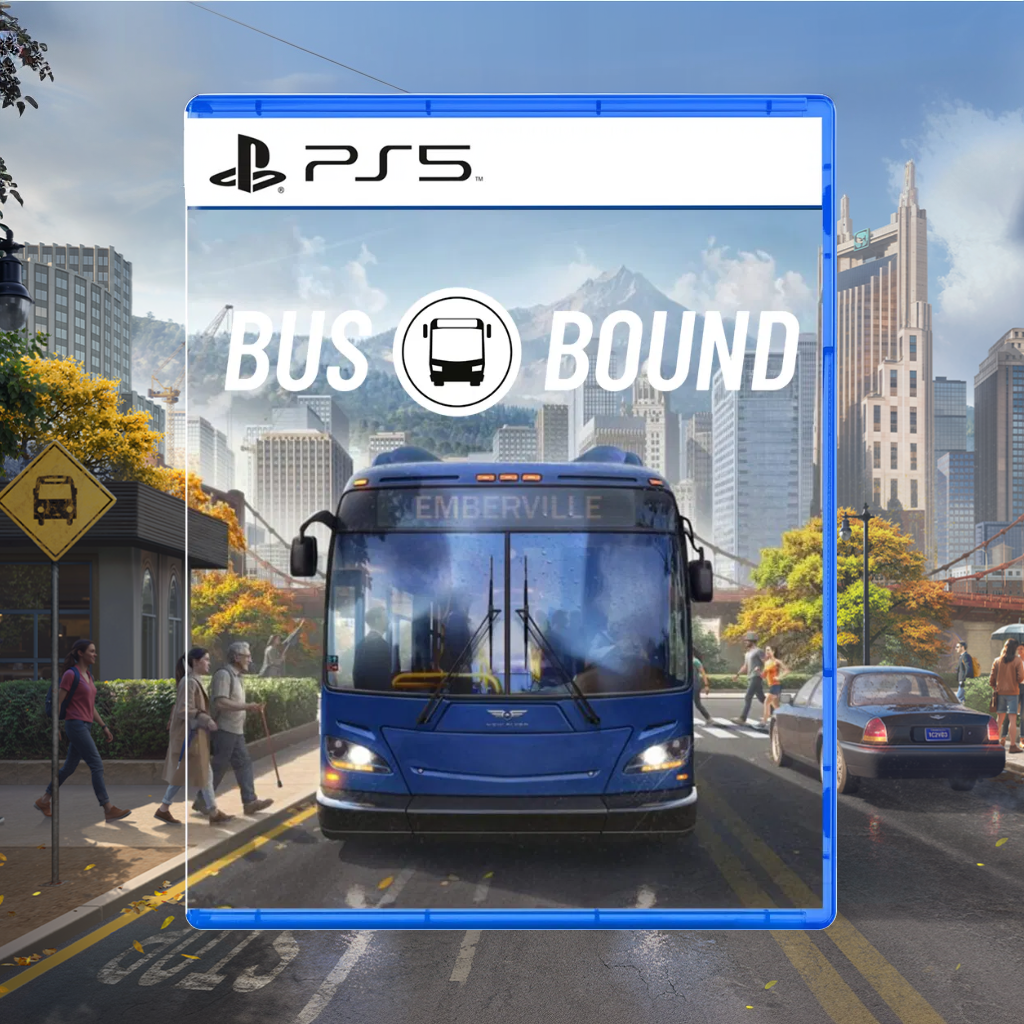
I joined Bus Bound during pre-production to support the developer team with structured UX input and help raise the project's UX maturity early on. That meant not just designing interfaces, but creating clarity around systems, player flows, and decision-making through workshops, rapid prototypes, and concrete interaction concepts the team could discuss, test, and build on quickly.
I joined after the project had already started and helped make gameplay and UI questions tangible early, so the team could align faster around what should actually be built.
Workshops, structured exploration, and concrete interface concepts helped move discussions from gut feeling toward clearer UX decisions and shared direction.
Abstract mechanics around routes, districts, and progression were translated into prototypes and flows that could be reviewed, discussed, and playtested quickly.
Personal note
My biggest personal challenge in this project was unlearning my standard UX mindset. In productivity apps, efficiency is everything. In gaming, efficiency alone kills the fun. I had to pivot from just 'making things clear' to managing the emotional rhythm of the journey—using cognitive science to balance boredom, anticipation, and the high-impact payoffs that keep players engaged for the long term.
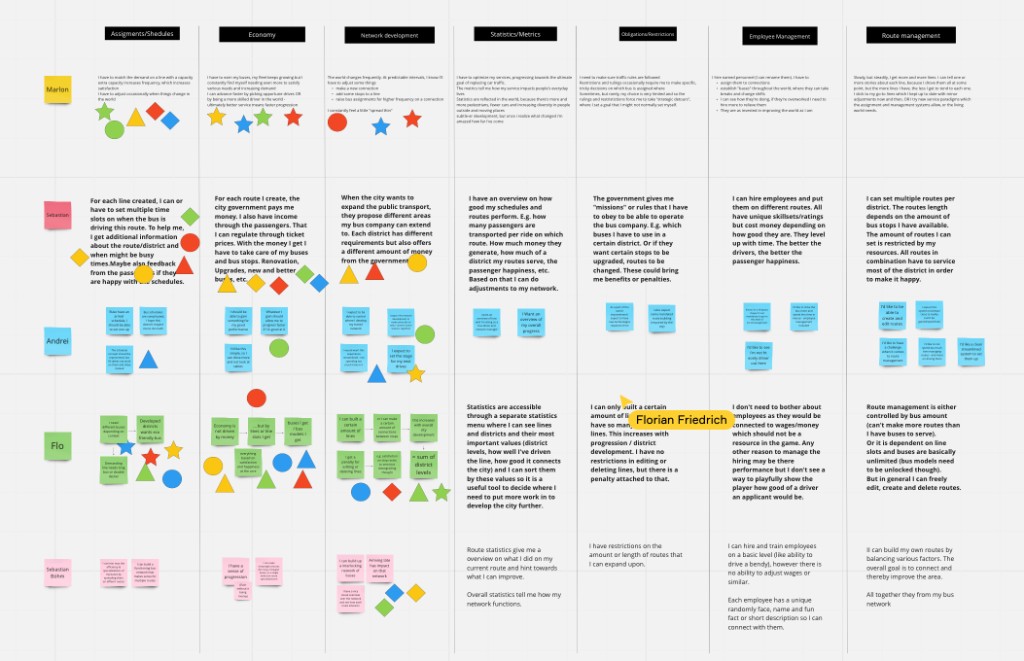
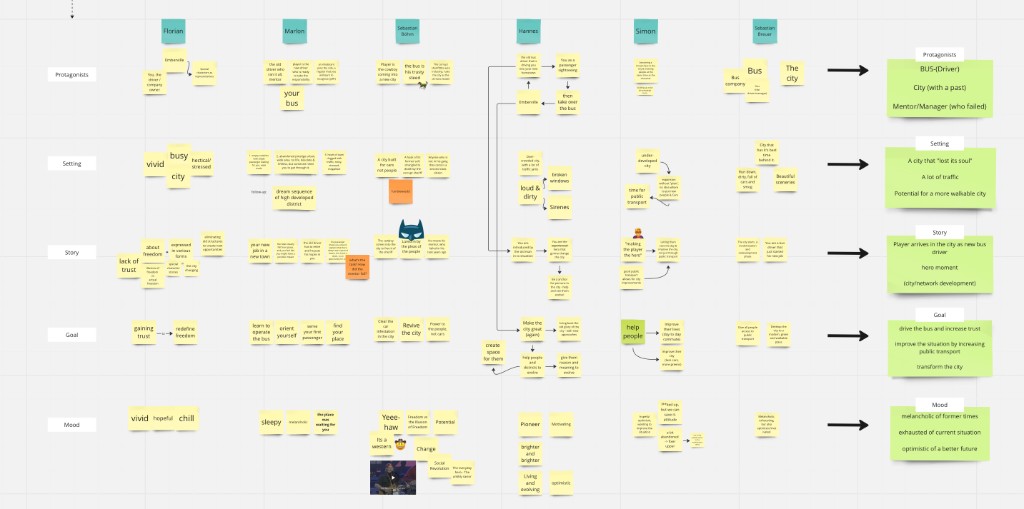
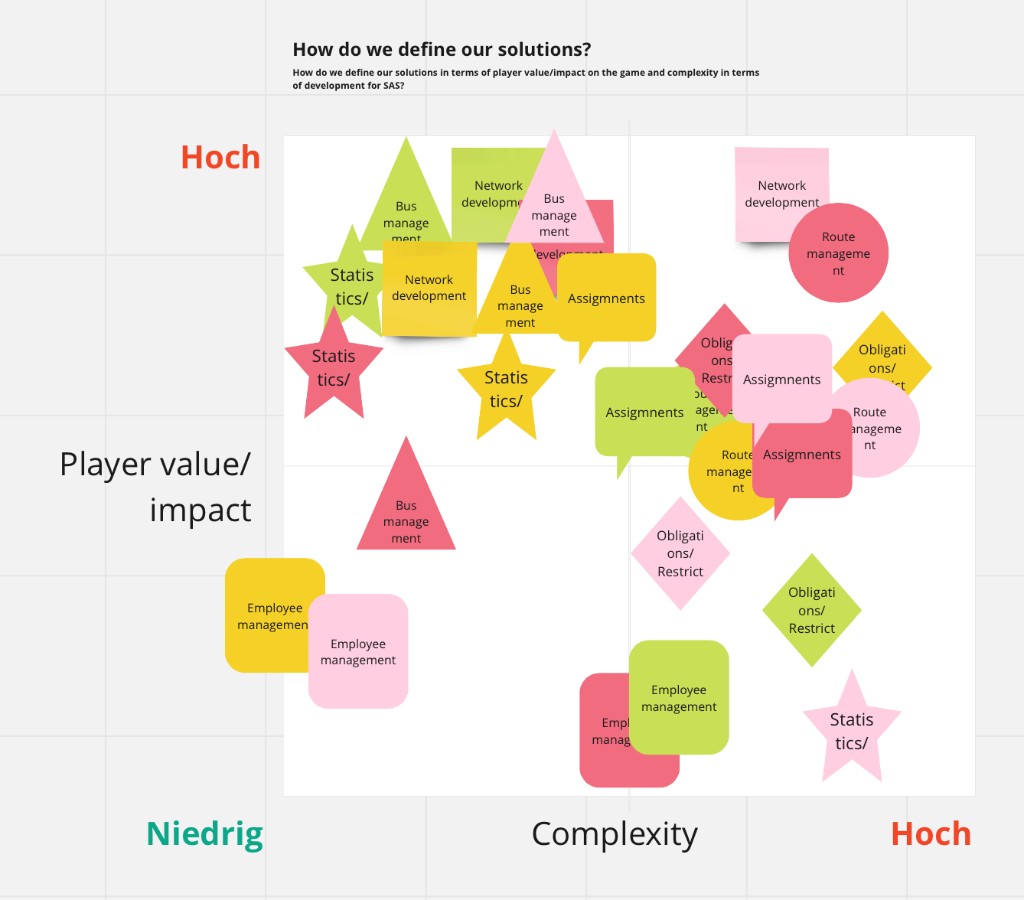
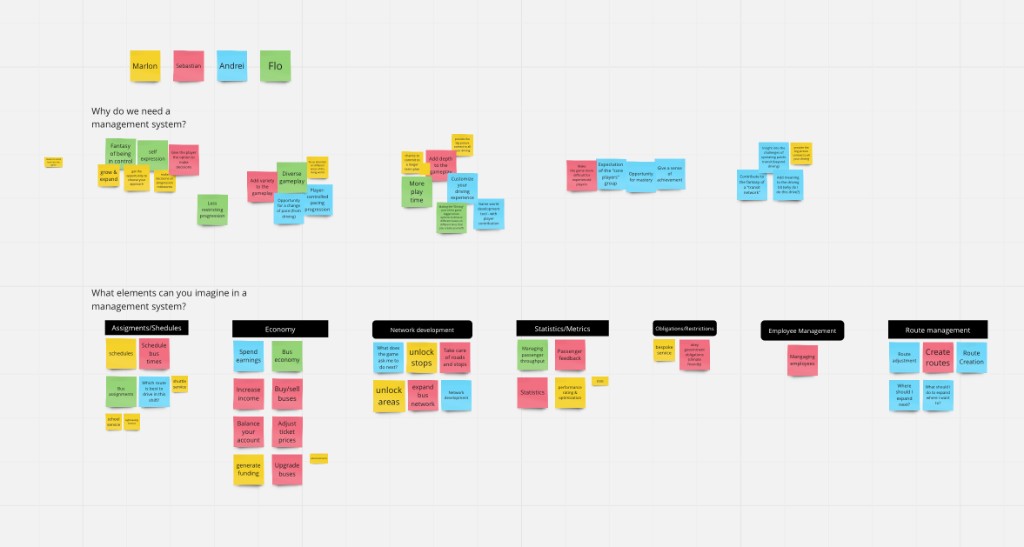
Together with game design, I ran design-thinking workshops to turn open gameplay questions into prioritized feature directions. Each session moved in one arc: frame the challenge, ideate and cluster on the boards, then rate what had the strongest leverage—feeding concrete hooks for gameplay, story, world-building, and progression.
Design thinking process
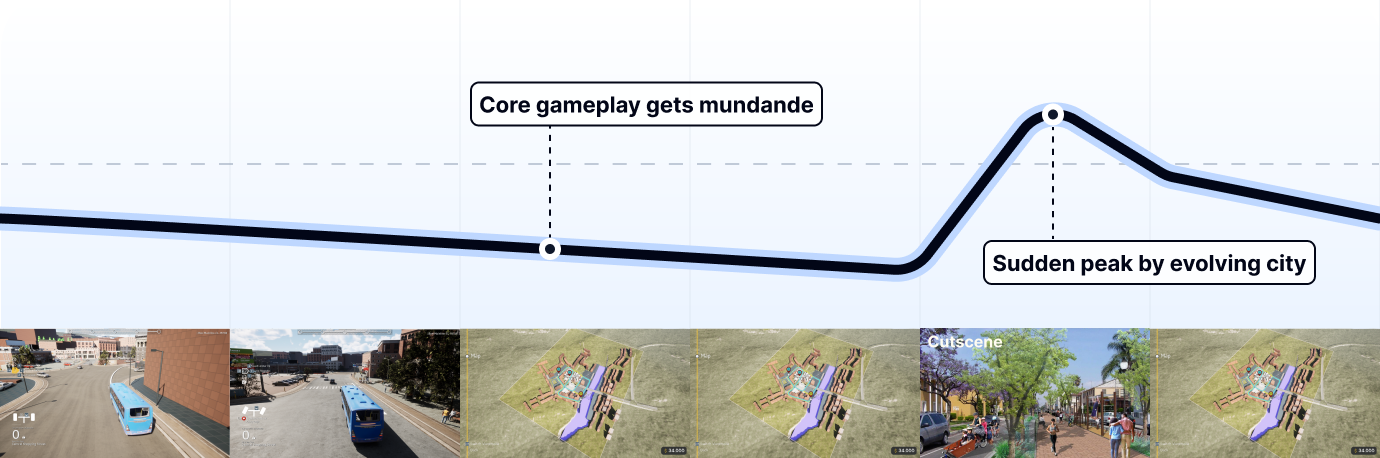
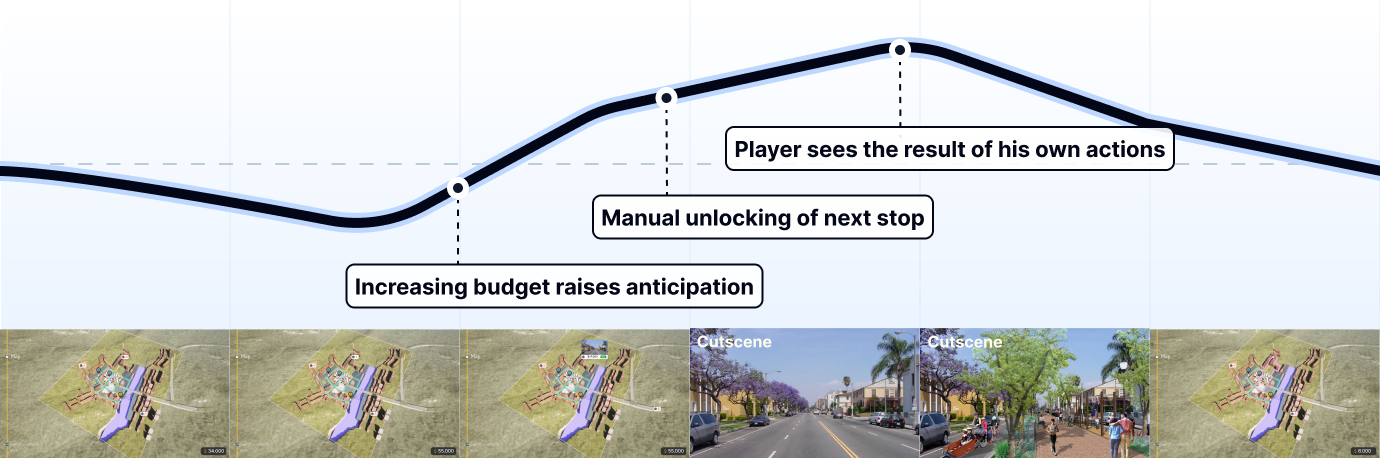
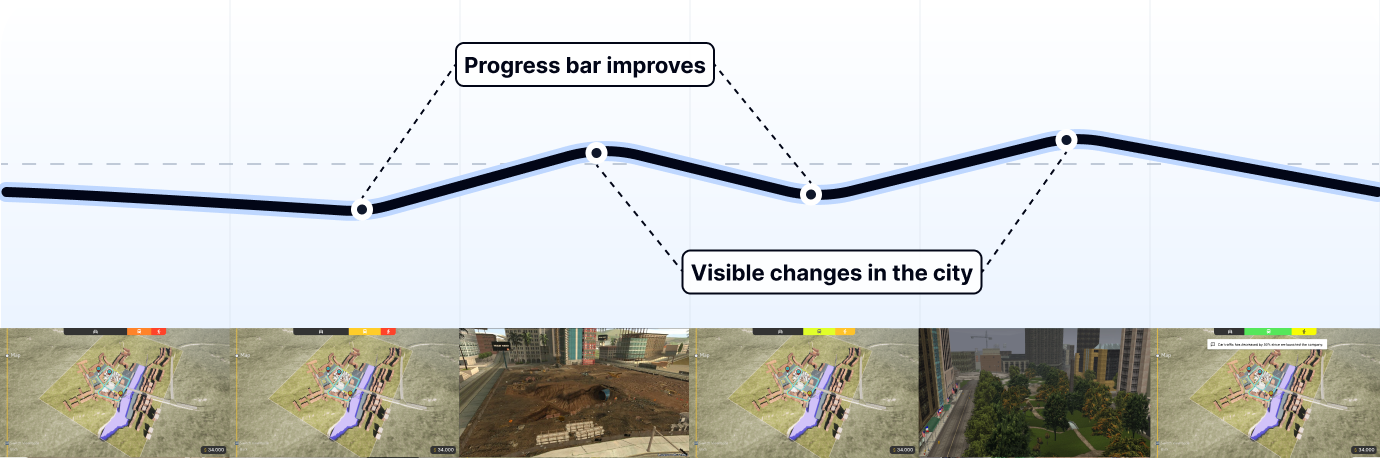
I mapped different gameplay scenarios to compare how player engagement and excitement shift across each loop. The goal was to understand which moments sustain motivation, where attention drops off, and how the overall player journey can keep players engaged for longer.
Existing model
Original loopPlayers play the core loop. After a certain playtime, cutscenes randomly appear and open up new stops or areas.
Active development
Tested conceptPlayers collect money, see the prices of available stops and areas, manually unlock them, and then experience them.
Passive development
Tested conceptPlayers have a progress bar on screen that shows development. Meanwhile, they can directly see changes in the city on the map while driving.
UI surfaces
HUD & prompts
Inventory / objectives
Meta progression
Settings & input hints
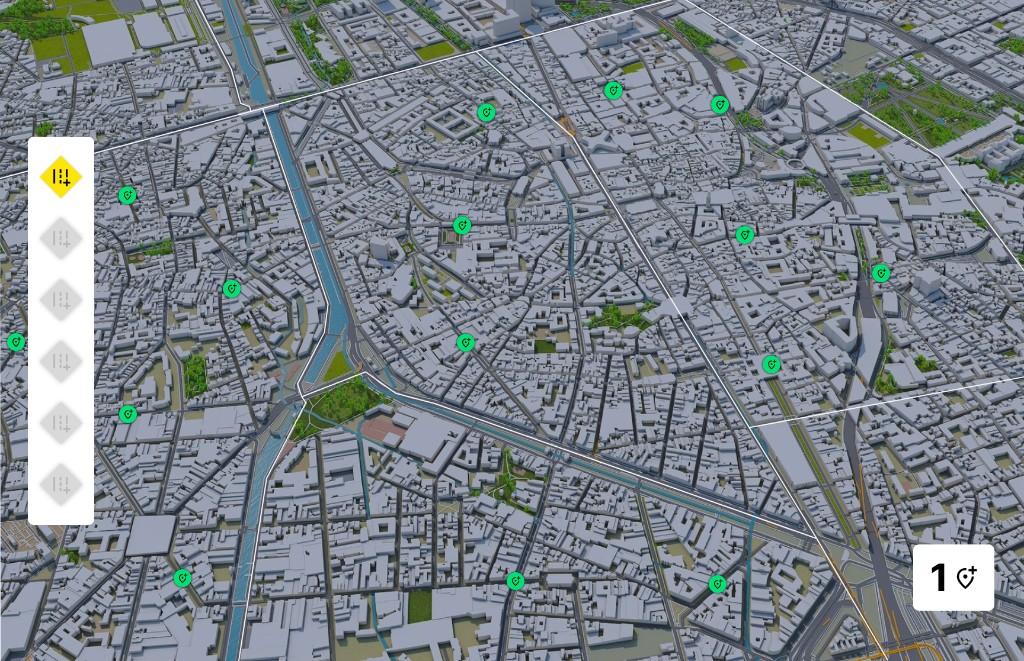
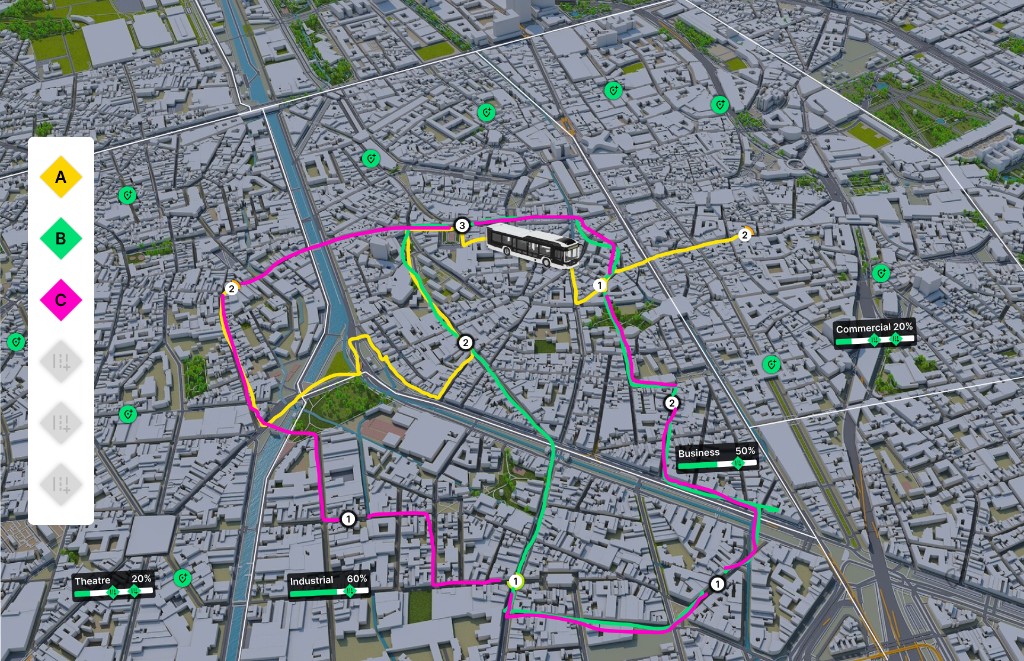
Bus Bound is a narrative-driven bus simulation game, and the idea here was to playtest route, stop, and district management systems early with as little production effort as possible. I prepared a lightweight Figma file with static screens and used it in moderated sessions to simulate progression, decisions, and upgrades quickly and efficiently, without needing a bigger budget or a fully interactive prototype first.
Prepared static screens that represented the key game states and progression moments.
Used dice rolls and moderated decisions to simulate player choices around stops, routes, and upgrades.
Observed how clearly players understood the loop and which map states felt rewarding or confusing.
Prototype map explorations
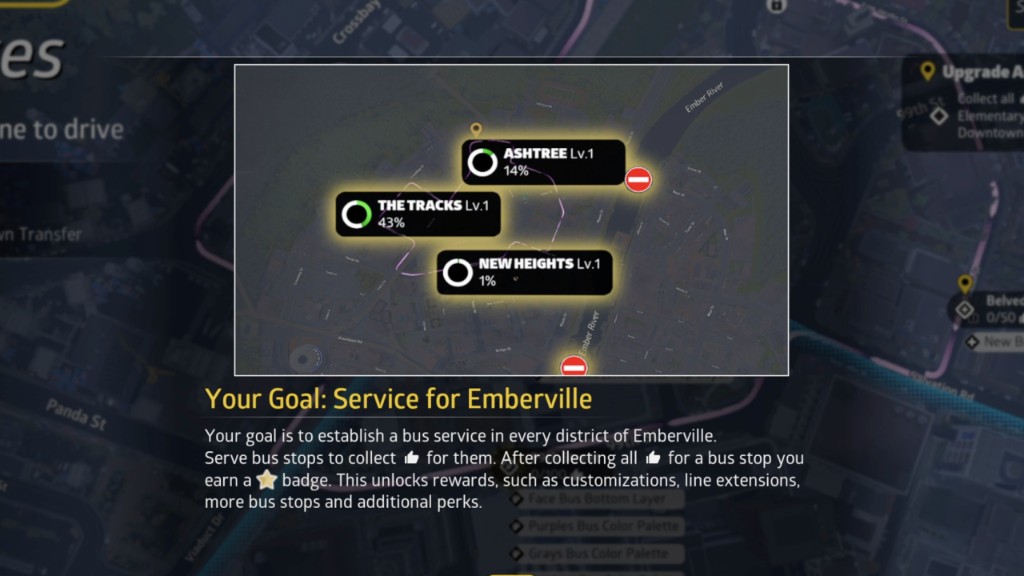
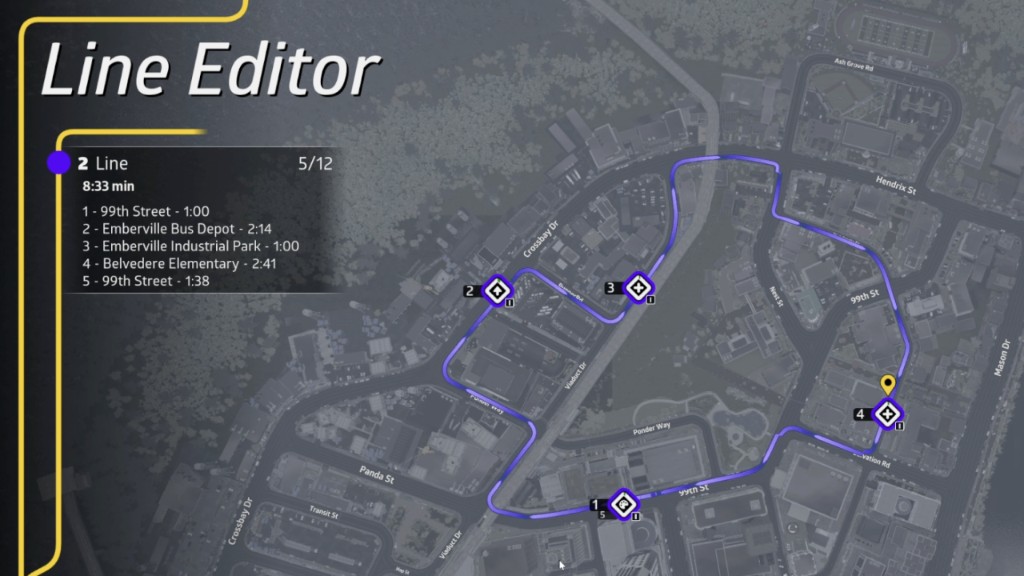
From prototype to released demo
Tested prototype logic laid the foundation for the release version line editor and stop progression flows.
I created a matrix of the bus' functions and gameplay parameters, then mapped them against information vs. action, visibility, usage frequency, and the moment in the driving loop where they matter most: driving, approaching, stopping, or leaving. That framework helped decide which elements stay persistent, which appear contextually, and how the HUD should adapt across each phase.

Driving phase explorations
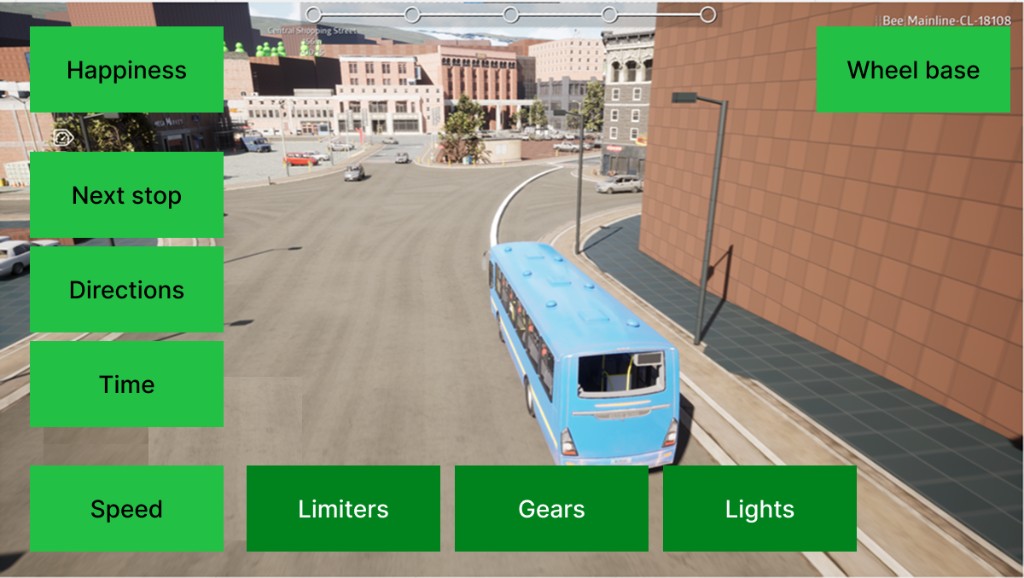
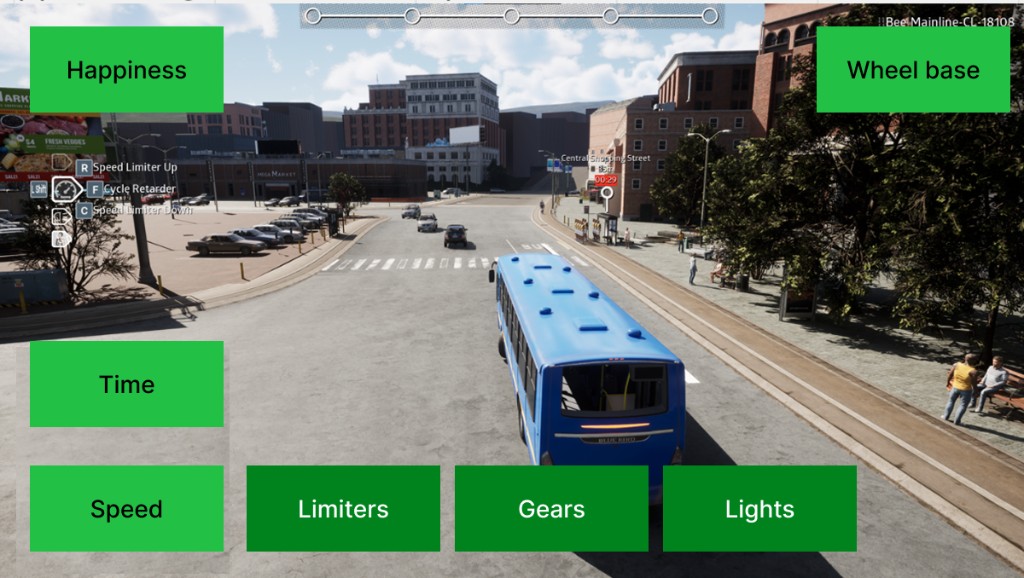
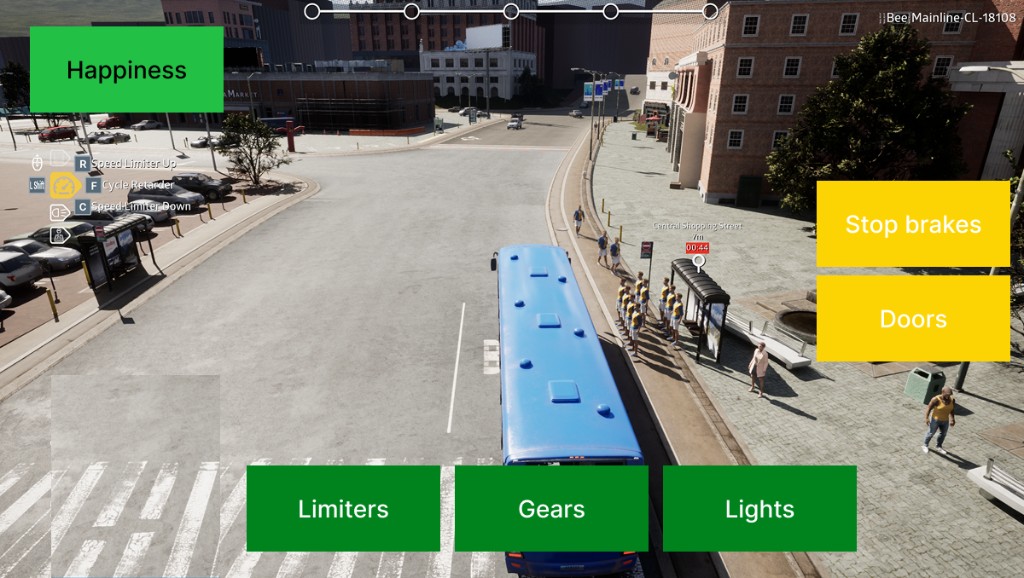
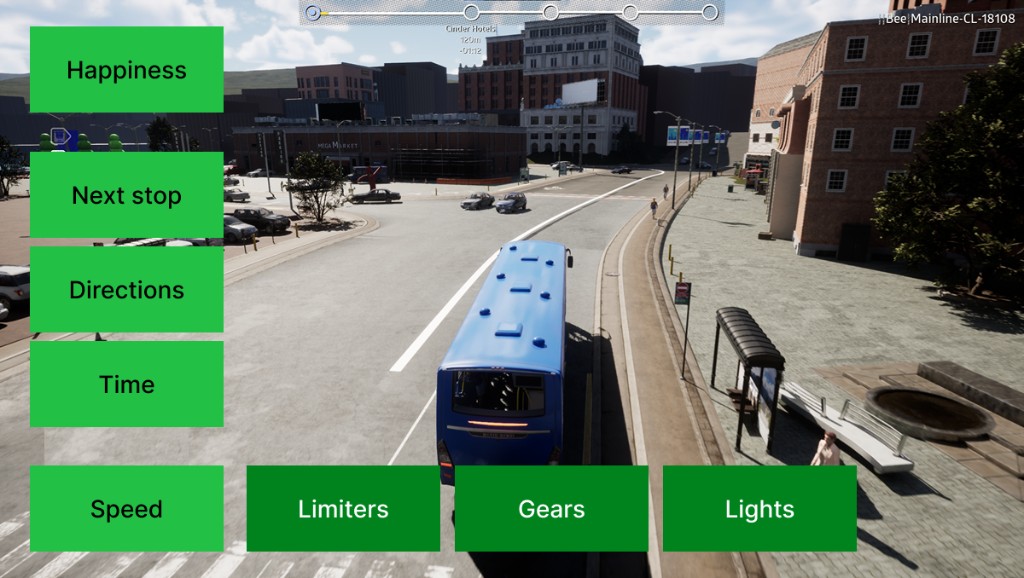
The four phase explorations informed how information density and visual hierarchy translated into the playable demo version.
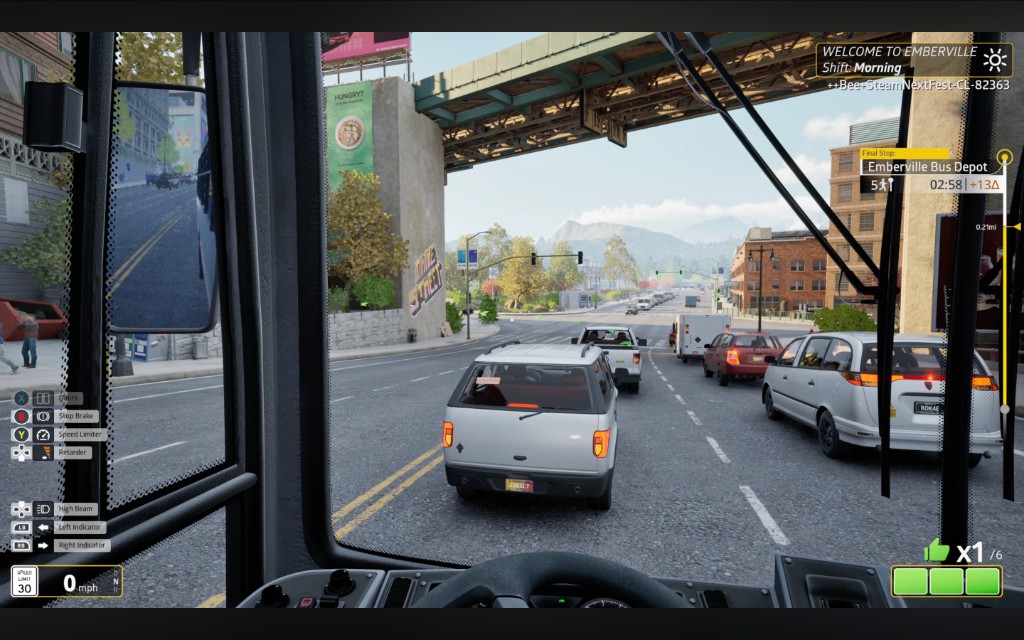
Instead of just delivering screens, I focused on establishing a sustainable UX culture within the studio. The real result was a shift in how we build games:
Low-Fidelity Validation
I championed a test-early, fail-fast approach. By introducing low-fidelity playtesting, we were able to identify friction points in navigation and systems logic long before a single line of code was written.
Design Thinking Workshops
I facilitated workshops that brought Game Design and UI closer together. This helped us cut through vague ideas and align on a more coherent roadmap for the core gameplay loop.
UX Coaching
Beyond my own concepts, I helped the team strengthen its user-centered thinking so that the player journey became a recurring lens for discussing systems, progression, story, and interface decisions.
Strategic Partnership
My insistence on rigorous testing proved valuable enough to help pave the way for a long-term partnership with an external playtesting lab, securing better validation for the rest of production.
The work laid the basis for several building blocks of the game, including UI direction, the gameplay loop, underlying systems, and the interplay between story and gameplay.
Testimonial: Wow, this was so different and interesting, approaching a feature from this user centered perspective.